
Cybersecurity lessons from 2025 we cannot ignore in 2026
A year dominated by attacks driven by Artificial Intelligence
Generative Artificial Intelligence amplified the scale of attacks. Hyper-realistic phishing, automated ransomware and synthetic voices raised the level of sophistication.
Sectors such as healthcare, transportation and energy suffered disruptions that showed how a digital incident can become a social problem:
• Hospital: data exfiltration and encryption — A ransomware group exploited a vulnerability in hospital systems, leaked patient data and forced manual operations. (December 2025). source
• Airports: check-in systems taken offline — A ransomware attack on a third party put kiosks and automated check-in out of service, causing long queues and delays. (September 2025). source
• Food supply chain: wholesale distributor paralyzed — An intrusion at a food wholesaler disrupted electronic ordering systems, forced manual processes and caused temporary shortages in supermarkets. (June 2025). source
• Energy infrastructure: risk from compromised components — Reports highlighted dependencies on critical equipment (solar inverters) with possible backdoors that could enable targeted blackouts. (December 2025). source
• Cloud services/infrastructure: massive outages at a provider — Changes/configurations at a CDN/cloud provider caused outages that affected multiple platforms and services globally. (November–December 2025). source
A more demanding regulatory environment
Governments tightened requirements and broadened responsibilities around privacy and resilience. The mere possibility of data misuse began to be considered grounds for claims, increasing pressure on organizations that do not adequately protect information.
What must change in 2026
2025 revealed a pattern: attackers move proactively and creatively, while defenders often respond late and with rigid processes. To reverse this dynamic, 2026 requires a mindset shift:
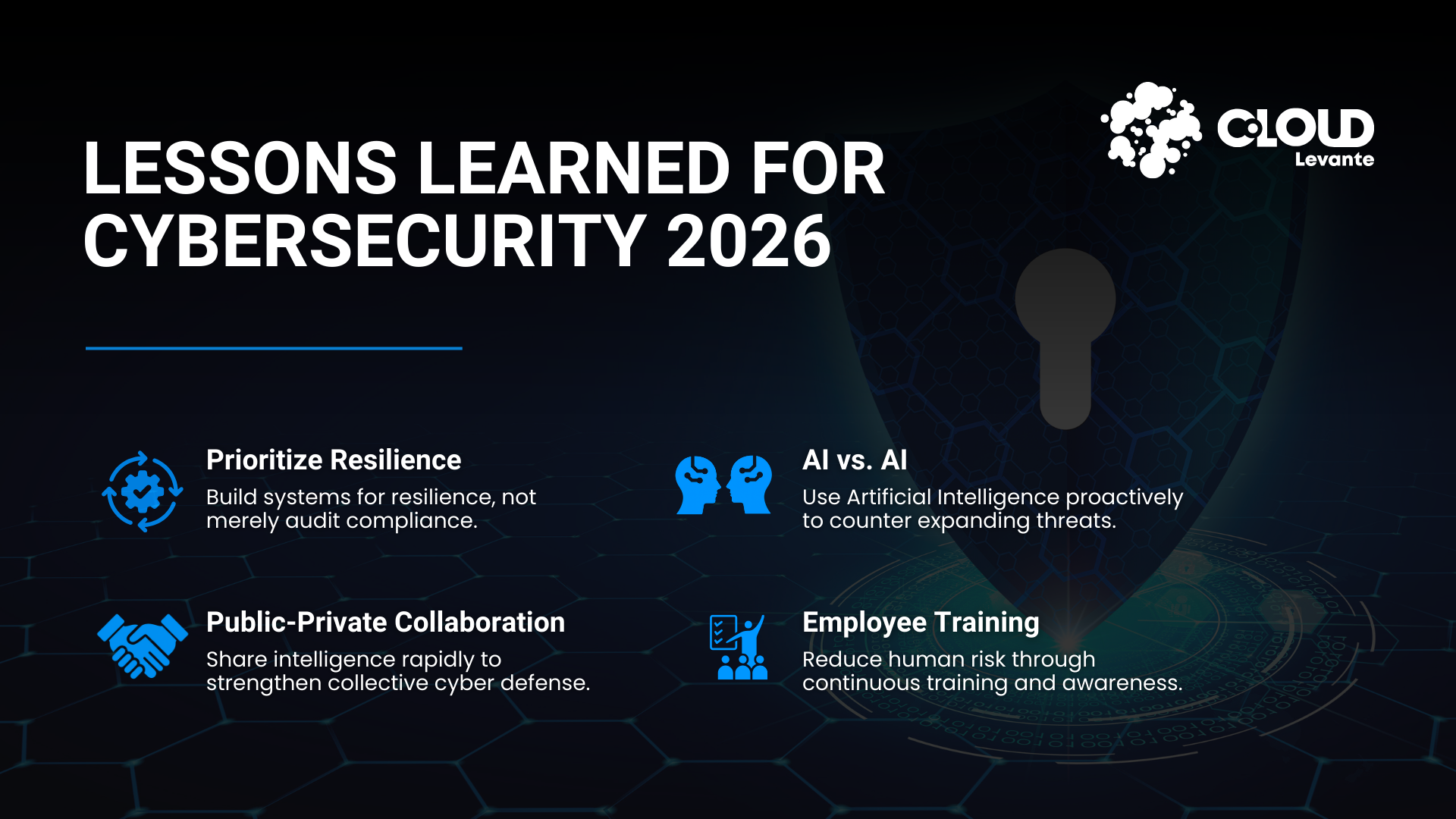
• Prioritize resilience over mere compliance: Passing audits is not enough. Systems must be designed to withstand failures, isolate damage and recover quickly when something goes wrong. The key question shifts from “Did we pass the audit?” to “Can we keep operating while under attack?”
• AI vs AI: If attackers use Artificial Intelligence to scale threats, defenders must deploy Artificial Intelligence to protect systems. Anomaly detection, prediction of malicious behavior and automated response will be essential against an attack volume that already exceeds human capacity.
• Public-private collaboration: Incidents affecting essential services show that no single organization can defend itself alone. Rapid sharing of early signals, attack patterns and best practices is essential to contain harm at a societal level.
• Employee training: Despite the rise of Artificial Intelligence, human error still opens doors. Continuous training, awareness and organizational cultures that reward caution will be as important as any cryptographic system.
A closing that opens a new phase
2025 made clear that cybersecurity protects far more than data: it protects continuity, trust and social safety. For 2026 to be different, protection must be integrated from the design phase of every digital service.